Blog

Book Review: Murder on the Orient Express by Agatha Christie
Agatha Christie’s Murder on the Orient Express (1934) is a timeless masterpiece of detective fiction, renowned for its intricate plot, psychological depth, and iconic ending. As one of Hercule Poirot’s most celebrated cases, the novel transcends the traditional whodunit formula, offering a profound exploration of justice, morality, and human nature.
Plot and Structure
The story unfolds aboard the luxurious Orient Express, where a snowstorm strands the train and its passengers—a diverse group of strangers with hidden pasts. When wealthy American businessman Samuel Ratchett is found murdered in his compartment, Poirot must unravel the mystery from a locked room with no apparent witnesses. Christie masterfully employs the "closed-circle" trope, confining the investigation to the train’s limited space, which intensifies the suspense and claustrophobia.
Characters and Themes
Poirot’s meticulous observation and "little gray cells" are central to the narrative, but the novel’s brilliance lies in its ensemble cast. Each passenger—from the aristocratic Countess Dragomiroff to the humble secretary Miss Debenham—harbors secrets, blurring the line between victim and perpetrator. Christie subverts expectations by transforming the murder into a collective act of revenge, challenging readers’ notions of law versus morality. The theme of "justice beyond the law" resonates deeply, reflecting post-WWI societal disillusionment.
Literary Impact
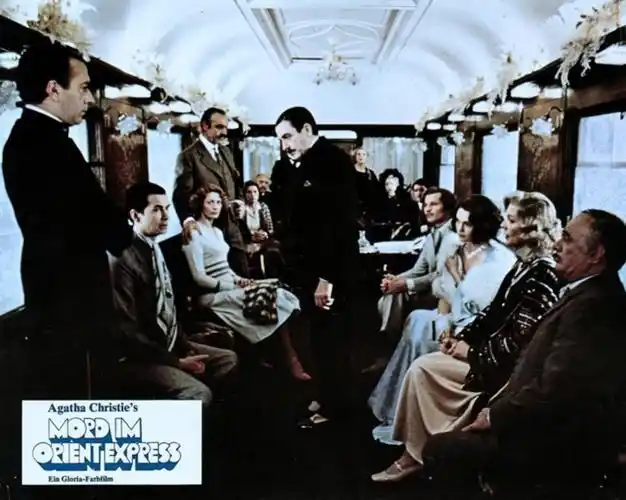
The novel’s twist ending—a revelation that redefines the entire investigation—has influenced countless works in crime fiction. Its psychological depth, compared to The Great Gatsby’s exploration of the American Dream, underscores Christie’s ability to weave social commentary into a thriller. The 1974 film adaptation, starring Albert Finney as Poirot, remains iconic, but the book’s layered narrative rewards close reading.
Why It Endures
Beyond its status as a "perfect murder mystery," Murder on the Orient Express endures for its moral ambiguity. Poirot’s final decision—to withhold the truth—sparks debate about whether justice can ever be absolute. This complexity, combined with Christie’s elegant prose and cultural insights, ensures the novel’s relevance across generations.
Verdict: A must-read for fans of classic whodunits and psychological drama, Murder on the Orient Express remains a benchmark in crime literature, proving that Agatha Christie’s genius lies in her ability to challenge conventions while delivering a satisfyingly clever puzzle.
Rating: ★★★★★ (5/5) – A flawless blend of suspense, character depth, and philosophical weight.